
Academic Project. Metro is a popular grocery store chain present across Quebec and Ontario. Their website offers mainly a shopping section to file an order to be delivered or picked up with integrated pay, but also supports browsing, finding recipes, and blog posts.
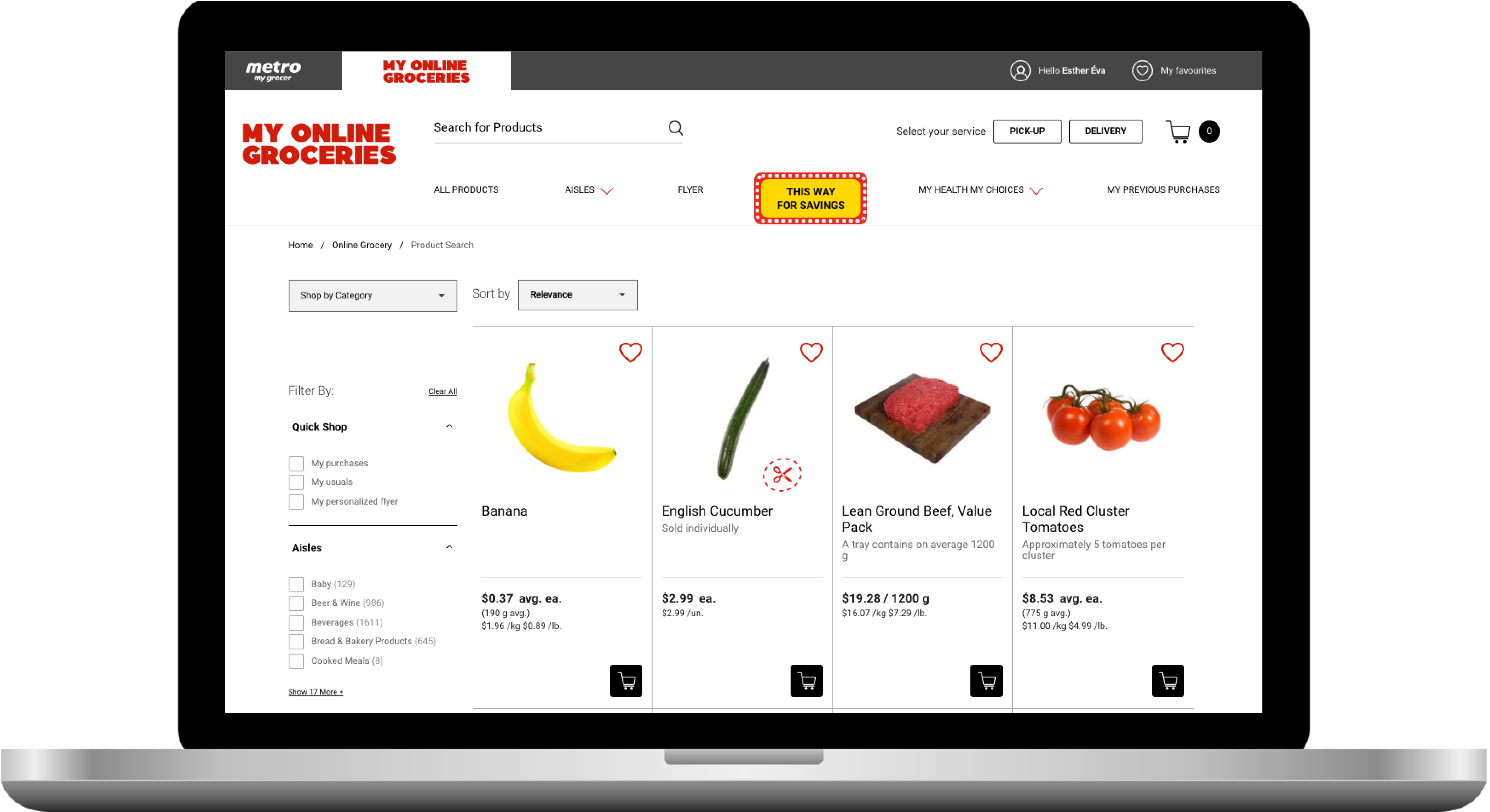
Run user testing to evaluate the usability and user experience of some facets of Metro's online groceries website.
The main purpose of this research in to uncover how Metro could enhance the experience of users when incorporating both core grocery shopping functions and complementary features.
Lab-based controlled setting
Each user asked to complete three tasks on Metro's website
20 minutes per participant
Think aloud protocol for users to share their thoughts while completing the tasks
Semi-directed interviews: using an interview guide for structure

You forgot a few ingredients for your brunch preparation: plan a delivery to receive acarton of 12 eggs and a bottle of Tropicana orange juice as soon as possible atyour home (postal code H3T 1T4)

You want to try cooking a vegan recipe this week. Find a recipe on metro.ca and add the first three ingredients to your cart.

You just remembered you had written a few ingredients for another recipe in “My List” to remind yourself of buying them the next time you went grocery shopping. Show me how you would add those ingredients to yourcurrent order.
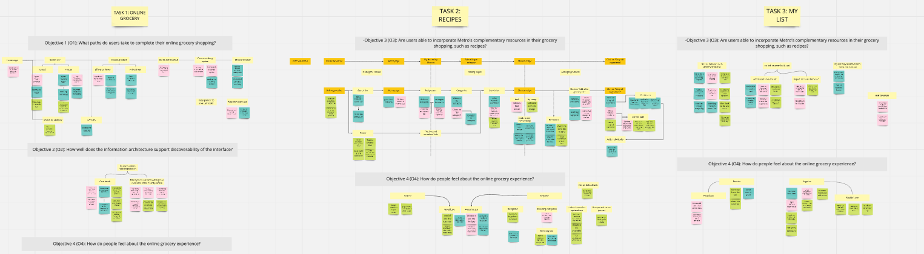
For each participant, interview recordings and notes taken were reviewed to extract all relevant data. Using the tool Miro, each key user observation/statement was transcribed on a single post-it. Each participant gets its designated color.
Then the sticky notes were reorganized into groups, to help identify commonalities and differences in the data. A first step of deductive analysis was accomplished, to create broad categories by task and research goal. Within each category, a second step of inductive analysis was ran to identify insightful patterns.
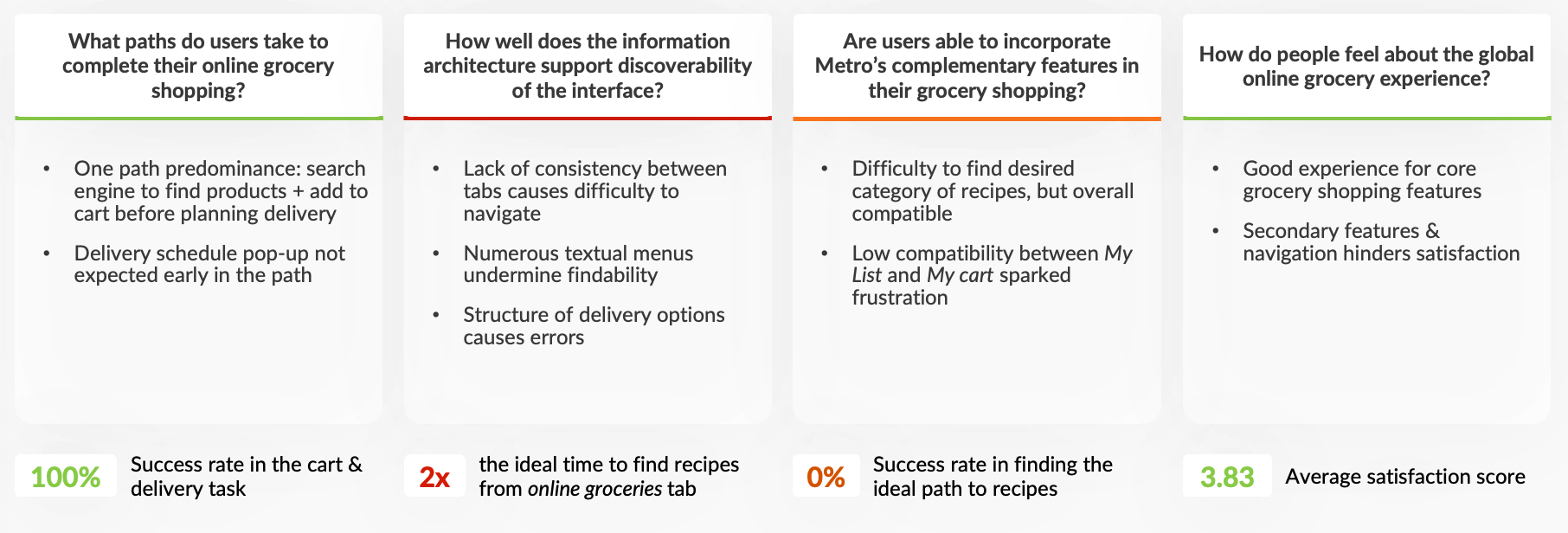
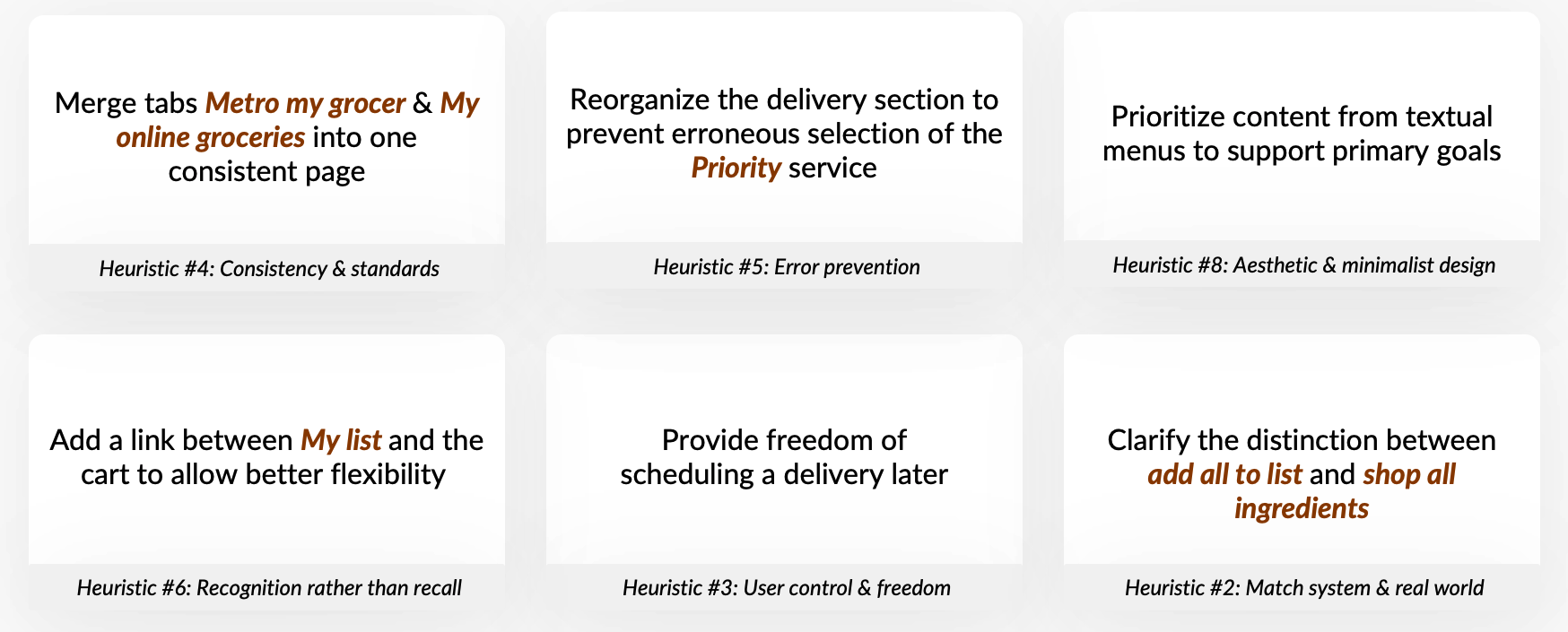


.png)